
Precision Spring Mold Manufacturing: Engineering Standards Behind High-Performance Industrial Springs
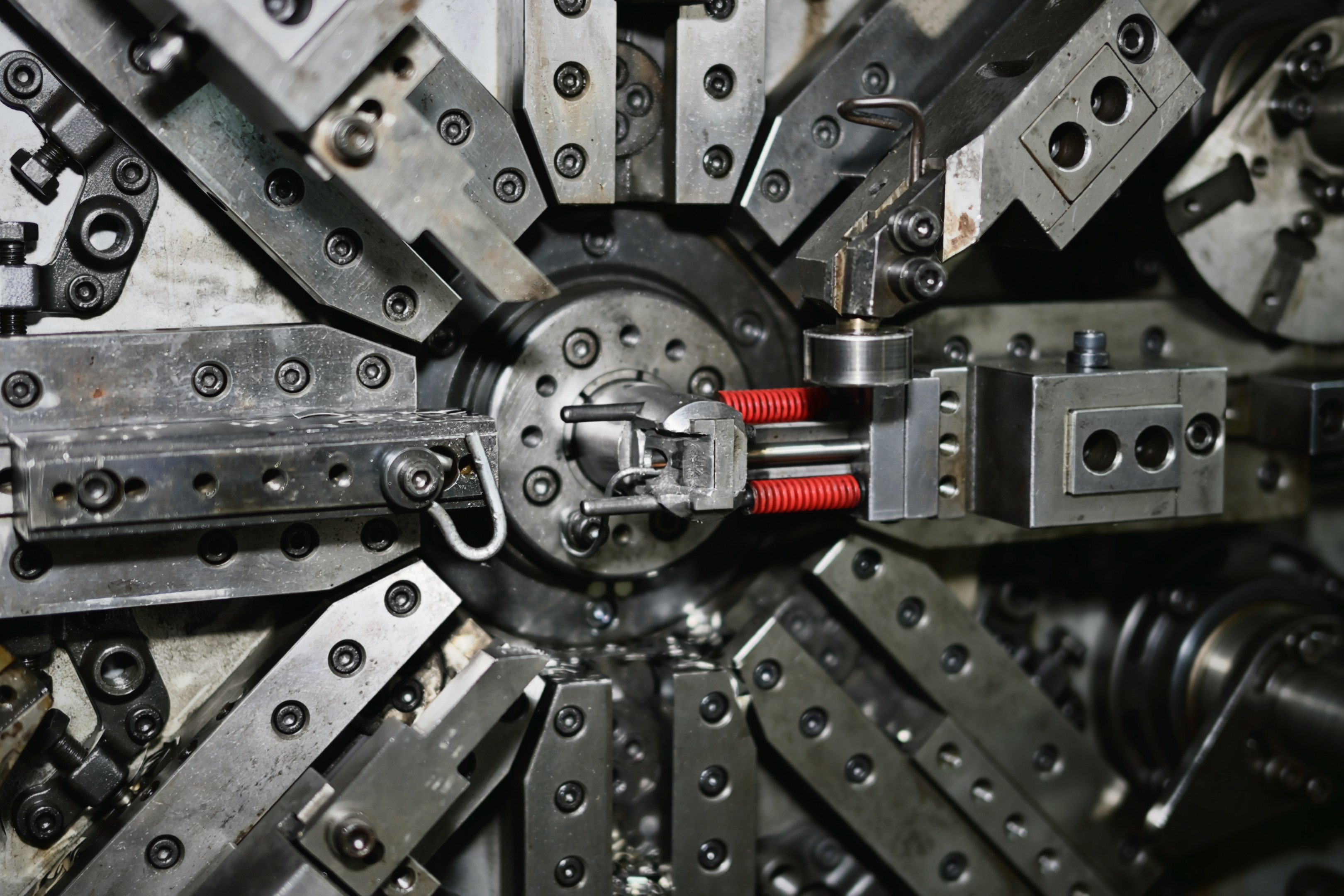
Precision Spring Mold Manufacturing: Engineering the Foundation of Industrial Spring Performance
In industrial applications, springs are often small components with a disproportionately large impact on system reliability. Behind every high-quality compression spring, torsion spring, or extension spring lies one critical factor: precision spring mold manufacturing.
Spring molds directly control geometry, elasticity, fatigue life, and production stability. For manufacturers serving automotive, machinery, construction, and equipment industries, mold quality determines whether spring performance remains consistent across thousands—or millions—of cycles.
At Toory Hardware Technology, spring mold manufacturing is treated as an engineering discipline, not a secondary process.
What Is Precision Spring Mold Manufacturing?
Spring mold manufacturing refers to the design and fabrication of specialized tooling that guides metal wire into precise spring forms during coiling and forming processes. These molds define:
- Coil diameter and pitch accuracy
- Wire alignment and stress distribution
- End configuration and symmetry
- Repeatability during mass production
In high-volume industrial spring manufacturing, even microscopic mold deviations can lead to inconsistent loads, premature fatigue, or assembly failures.
Engineering Principles Behind High-Quality Spring Mold Design
1. Dimensional Control and Tolerance Management
Precision molds must maintain tight tolerances under continuous mechanical stress. CNC-machined tooling ensures:
- Stable inner and outer coil diameters
- Uniform pitch spacing
- Consistent spring length after forming
This level of accuracy is essential for precision springs used in automated systems and mechanical assemblies.
2. Stress Distribution and Elastic Performance
Spring molds influence how stress is distributed along the wire during forming. Poor mold geometry can introduce micro-cracks or uneven stress zones, reducing fatigue life.
Toory’s mold designs are optimized to support:
- Smooth wire bending
- Reduced internal stress concentration
- Improved elastic recovery
3. Compatibility with Different Spring Types
Precision mold systems must adapt to various spring structures, including:
- Compression springs for load-bearing applications
- Torsion springs requiring controlled rotational force
- Extension springs with precise hook geometry and tension
Each spring type requires customized mold profiles and forming strategies.
CNC Technology in Spring Mold Manufacturing
Advanced CNC Machining for Tooling Accuracy
Toory uses CNC machining and precision grinding to produce spring molds with micron-level accuracy. CNC technology enables:
- High repeatability across tooling batches
- Faster mold development and adjustment
- Stable performance during high-speed production
This capability supports both custom spring manufacturing and long-term OEM projects.
Tool Steel Selection for Mold Durability
Spring molds operate under constant friction and pressure. Toory selects high-grade tool steels with:
- High hardness and wear resistance
- Thermal stability during continuous operation
- Long service life under industrial conditions
Durable molds reduce downtime, tooling replacement costs, and production variability.
Quality Control in Spring Mold Manufacturing
Dimensional and Surface Inspection
Each mold undergoes precision inspection to verify:
- Dimensional accuracy
- Surface smoothness
- Structural integrity
These inspections ensure that the mold can consistently produce high-quality industrial springs.
Trial Production and Performance Validation
Before mass production, molds are tested through trial spring runs to validate:
- Load consistency
- Elastic performance
- Fatigue resistance
Only molds that meet strict performance criteria enter full-scale production.
Impact of Mold Quality on Mass Production Stability
In large-scale industrial spring production, mold quality directly affects:
- Production efficiency
- Scrap rate
- Product consistency
- Customer assembly reliability
High-precision molds allow stable output over extended production cycles, which is critical for automotive and equipment manufacturers.
Sustainable Manufacturing Through Precision Tooling
Precision spring mold manufacturing also supports sustainable manufacturing goals. At Toory, sustainability is achieved by:
- Extending mold service life to reduce material waste
- Optimizing forming efficiency to lower energy consumption
- Reducing defect rates through accurate tooling
Durable molds mean fewer replacements, less scrap metal, and a more environmentally responsible production process.
Why Precision Spring Mold Manufacturing Matters to Customers
For customers, investing in high-quality spring molds translates into:
- Longer-lasting springs
- Lower maintenance and replacement costs
- Improved system reliability
- Consistent performance across production batches
This is especially important for industries where spring failure can lead to downtime or safety risks.
Conclusion
Precision spring mold manufacturing is the technical backbone of reliable industrial spring solutions. Through advanced CNC tooling, engineering-driven mold design, strict quality control, and sustainable practices, Toory ensures that every spring meets demanding performance standards.
As a professional custom spring manufacturer, Toory supports clients from mold development to mass production—delivering precision, durability, and long-term value.
Stay ahead in manufacturing
Get insights on precision engineering and industry trends delivered to your inbox